
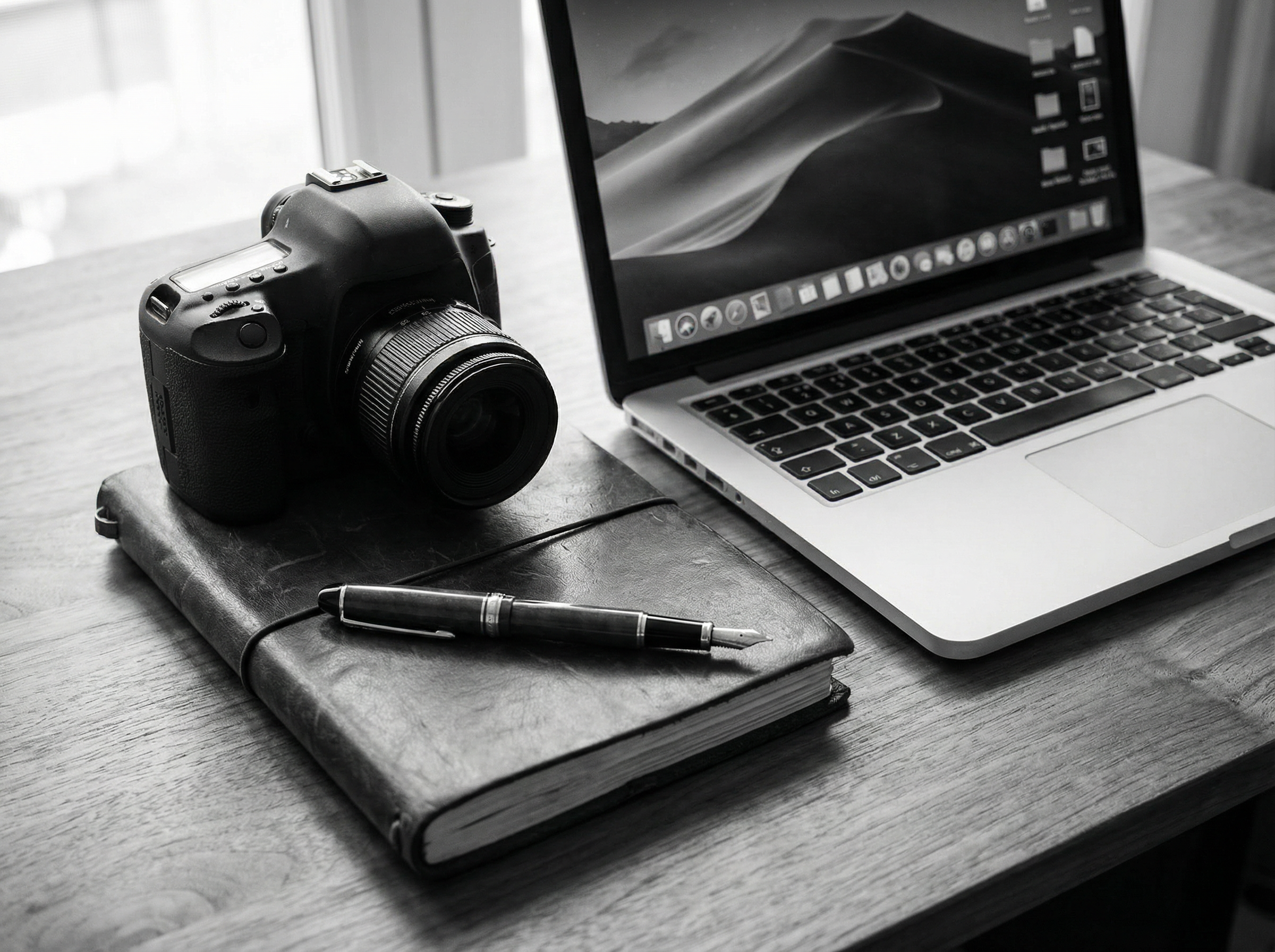
Common Beginner Photography Mistakes
(And How to Fix Them)
Every photographer starts somewhere — and mistakes are a natural part of learning. The key is knowing what to watch for and how to correct it. Here’s a practical guide for beginners to avoid common pitfalls and improve their images quickly.
1. Overexposed or Underexposed Photos
Problem: Images are too bright (overexposed) or too dark (underexposed).
Fix:
Check your exposure meter before shooting.
Adjust ISO, aperture, or shutter speed in small increments.
Shoot in RAW so you can correct exposure in post-processing.
Tip: Slightly underexposing can retain details in highlights, which is easier to fix later than blown-out skies.
2. Blurry Images
Problem: Photos are out of focus or shaky.
Fix:
Use faster shutter speeds for moving subjects (1/500+ for action).
Keep the camera steady — use tripods or stable surfaces.
Learn to focus correctly: single-point autofocus for static subjects, continuous autofocus for moving subjects.
3. Crooked Horizons
Problem: Landscapes or cityscapes look tilted.
Fix:
Use the grid overlay on your camera or phone to align horizons.
Check your composition before pressing the shutter.
Correct small tilts in post-processing if necessary.
4. Cluttered Backgrounds
Problem: Background distracts from your subject.
Fix:
Move your subject or yourself to find a cleaner background.
Use shallow depth of field (low f-number) to blur distractions.
Be mindful of unwanted objects or people entering the frame.
5. Overediting
Problem: Excessive filters, saturation, or sharpening make photos look unnatural.
Fix:
Make subtle adjustments in exposure, contrast, and color.
Compare before-and-after frequently.
Aim for timeless, natural results rather than trendy effects.
6. Ignoring Light
Problem: Photos taken in harsh or poor lighting lack depth and clarity.
Fix:
Observe direction and quality of light before shooting.
Use window light indoors or shoot during golden hour outdoors.
Avoid shooting directly into strong midday sunlight unless it’s intentional.
7. Relying Too Much on Auto Mode
Problem: You never learn to control exposure, focus, or creative settings.
Fix:
Start experimenting with Aperture Priority or Manual Mode.
Adjust one setting at a time to understand its effect.
Practice regularly — confidence comes with hands-on experience.
8. Not Cleaning the Lens
Problem: Dust, fingerprints, or smudges reduce image sharpness.
Fix:
Use a microfiber cloth or lens cleaning kit.
Keep your camera and lenses in a protective bag when not in use.
9. Forgetting Composition Rules
Problem: Subjects are centered or framed poorly, making photos look flat.
Fix:
Apply rule of thirds, leading lines, framing, and negative space.
Experiment with angles and perspectives to create depth.
Review your images critically and adjust next time.
Final Tips for Beginners
Take your time — don’t rush each shot.
Review and learn from mistakes; each one teaches a lesson.
Start simple: light, composition, and focus matter more than expensive gear.
Practice consistently — improvement comes with observation and repetition.
Mistakes are part of the learning process. By being aware of these common issues and applying these fixes, your photos will look sharper, cleaner, and more professional in no time.